Stay Healthy Cluster Symposium in Berlin: Advancing Personalised Prevention and Chronic Inflammation Research
1–2 December 2025 | Berlin, Germany
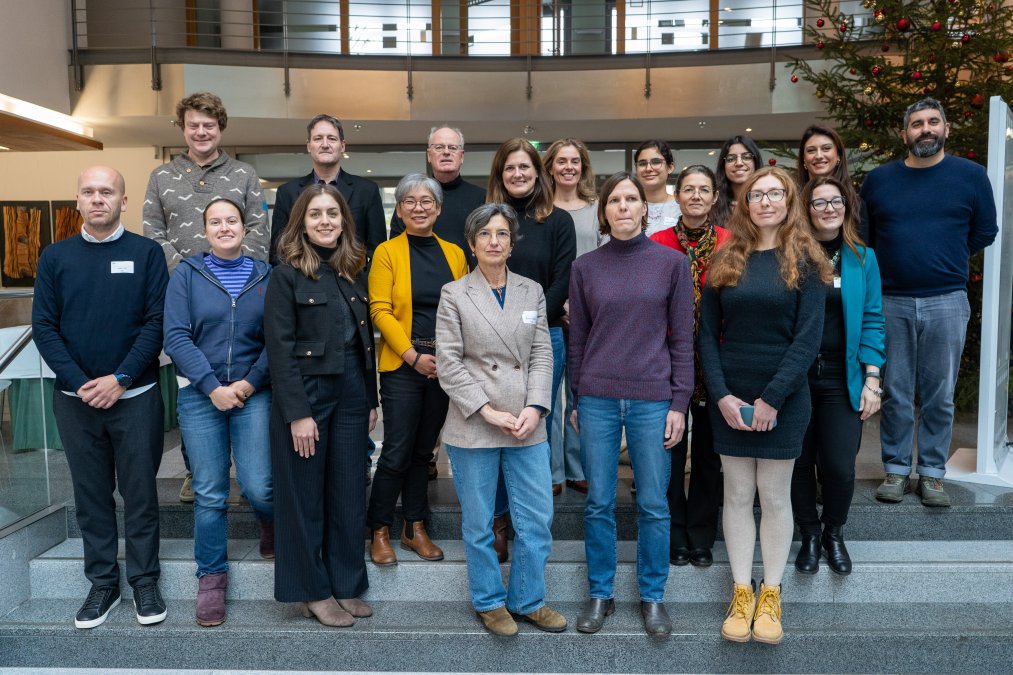
The IMMEDIATE project successfully organised the Stay Healthy Cluster Symposium on 1–2 December 2025 in Berlin, bringing together researchers, clinicians, citizens, and patient representatives for two days of discussion and knowledge exchange. With strong support from its cluster partners INITIALISE, EndoTarget,miGut-Health, HaltRonin, and GlycanTrigger, the event highlighted how European research is advancing our understanding of chronic inflammation and the health-to-disease transition, while strengthening the role of personalised prevention in public health. All participating projects are funded under the European Commission’s Horizon Europe programme within the call “Personalised Blueprint of Chronic Inflammation in Health-to-Disease Transition.”
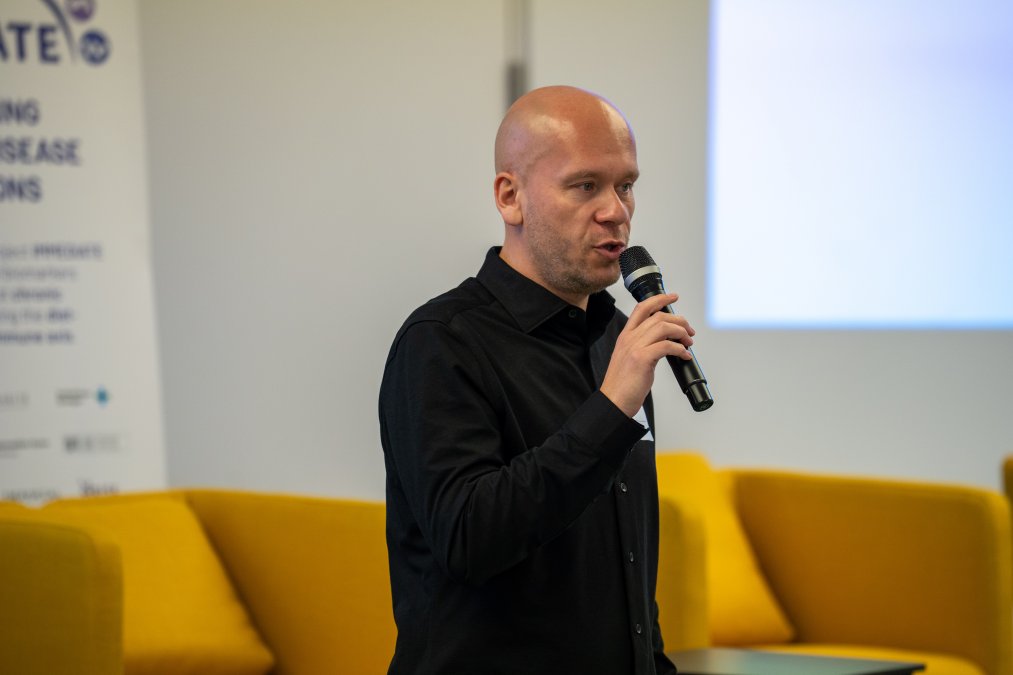
The symposium opened with welcoming words from IMMEDIATE coordinators Friedemann Paul and Chotima Böttcher, who set the tone for a day dedicated to scientific exchange and collaboration. Their introduction emphasised the importance of uniting diverse expertise across Europe to address the challenges posed by chronic inflammation and to work collectively toward more personalised and preventive approaches to health.
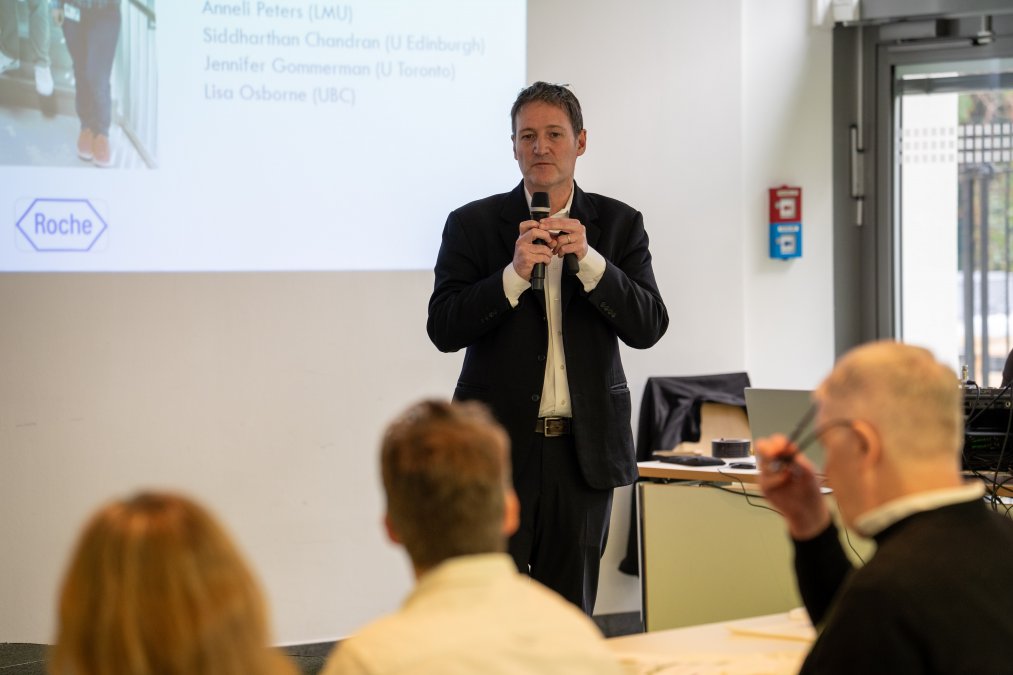
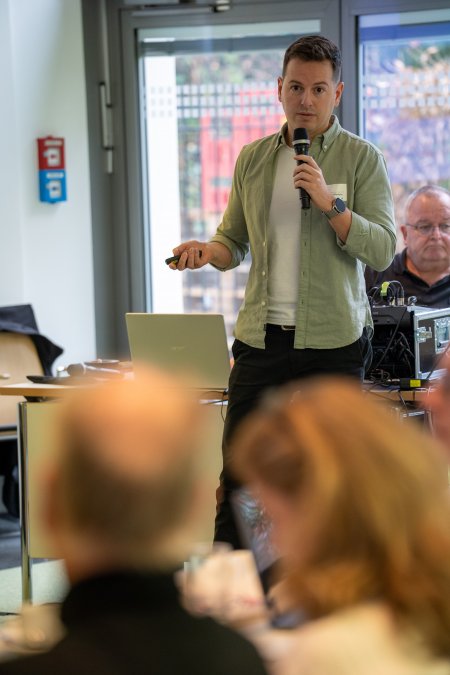
Following the opening remarks, the programme continued with contributions from researchers across Europe. Presentations were delivered by Leonard Nelson on the Halt Ronin project, Alex Dickens on the INITIALISE project, Katharina Nimptsch on IMMEDIATE, Malte Rühlemann on miGut-Health, Eduarda Gomes on GlycanTrigger, and Gonçalo Barreto on EndoTarget. The following talks covered a wide range of research topics. Karolina Skonieczna-Żydecka (Pomeranian Medical University in Szczecin) presented the study within IMMEDIATE on the influence of Akkermansia muciniphila on the microbiome and stress. Sina Hübener (Universitätsklinikum Hamburg-Eppendorf) talked about new insights from the miGut – Health clinical study exploring the long-term effects of a gluten-free diet in IBD patients, emphasising how lifestyle and dietary choices can influence disease management. Together, these presentations demonstrated both the scientific depth and the complementary nature of research across the Stay Healthy Cluster.
A major highlight of Day 1 was the keynote lecture delivered by Sergio Baranzini from the University of California, San Francisco. His talk, “SPOKE: A massive knowledge graph to integrate biomedical data at scale,” offered a compelling perspective on how large-scale knowledge integration can accelerate biomarker discovery, deepen insight into inflammatory pathways, and enable more precise and personalised prevention strategies. His contribution set a forward-looking tone for the symposium by emphasising the importance of computational tools and interconnected data and knowledge in contemporary health research.
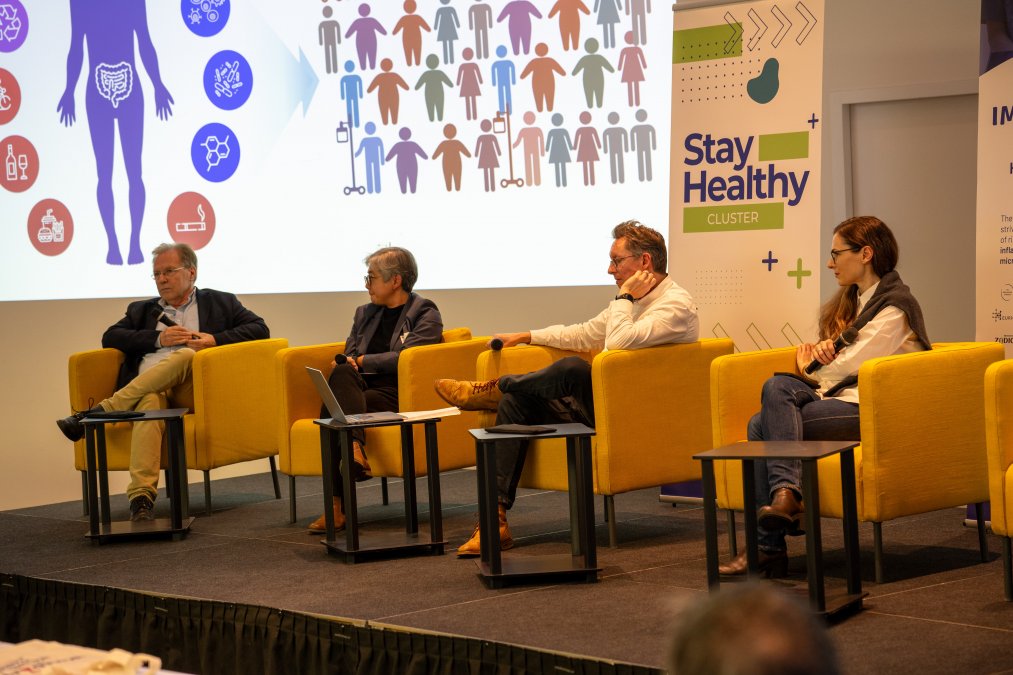
The momentum continued with a panel discussion moderated by Chotima Böttcher, featuring project coordinators from the cluster. The discussion highlighted the shared challenges that Horizon Europe health projects face, including ethical considerations related to data sharing, integrating AI tools into research frameworks, and working with sensitive populations such as children. This exchange underscored the value of cross-project collaboration and the collective commitment of the cluster to transparency, innovation, and responsible research practices.
Rohan Singh (miGut-Health) presented MyFoodRepo, an AI-driven tool for personalised nutrition that enables individuals to monitor their dietary habits and gain insights into their nutrition-related behaviours. This was followed by a presentation from Giulia Candini (ZADIG), who introduced IMMEDIApp, developed within the IMMEDIATE project, to help individuals track their lifestyle habits, understand stress patterns, and explore how these factors relate to the microbiota and overall health. Both presentations illustrated how digital innovation can connect citizens more directly to preventive health strategies.
“This symposium showed the strength of European collaboration in addressing chronic inflammation. Bringing researchers, clinicians, and citizens together is essential to building a truly personalised and preventive approach to health,” said Friedemann Paul, Coordinator of the IMMEDIATE project.
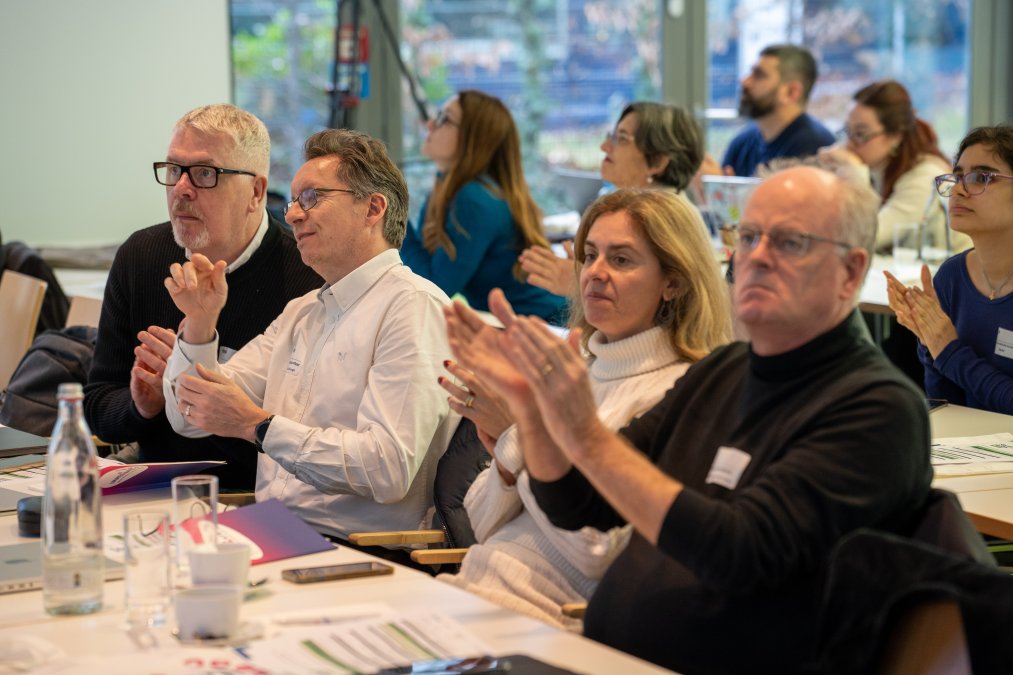
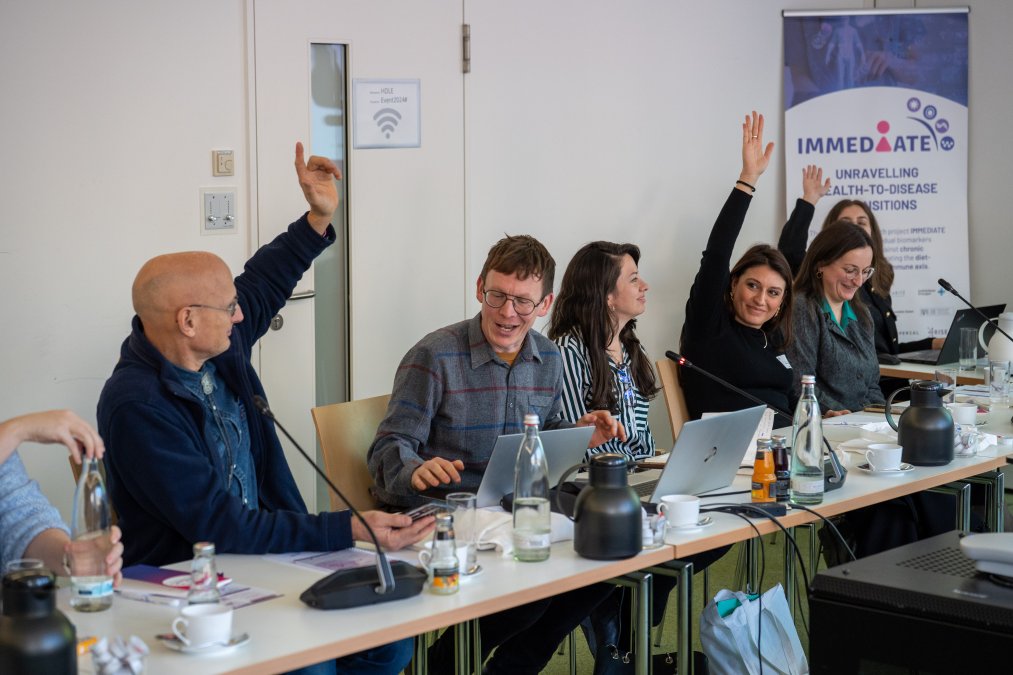
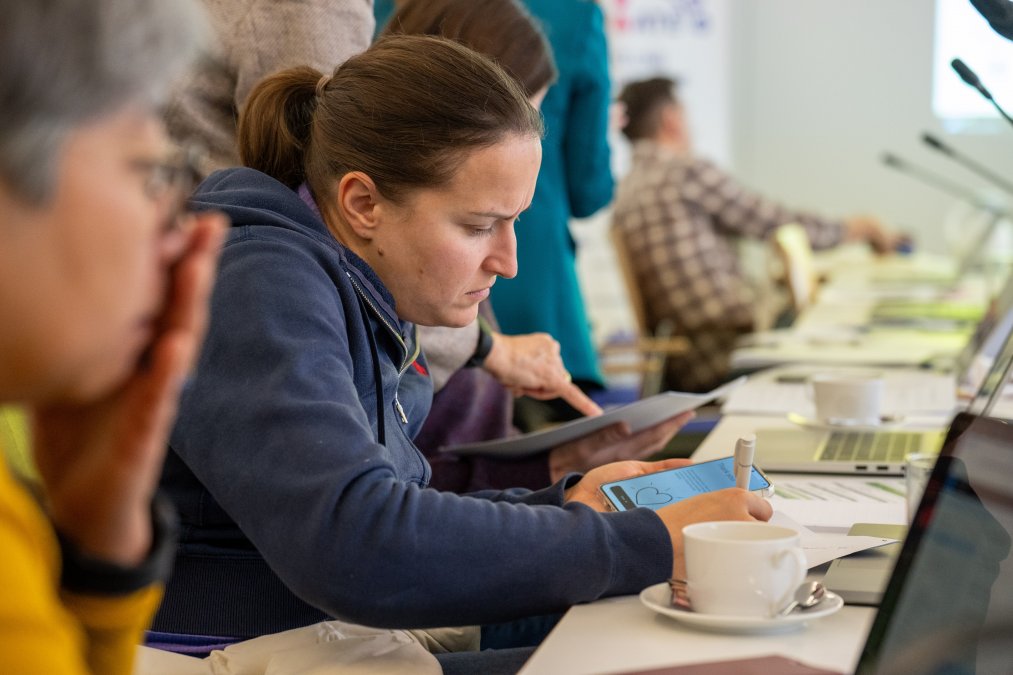
The second day of the symposium shifted the attention toward personalised prevention and citizen engagement, demonstrating how scientific insights can be translated into practical tools for the public. The IMMEDIATE project organised an interactive workshop dedicated to the IMMEDIA app, led by ZADIG. Participants engaged enthusiastically with the app, testing its features and providing valuable feedback that will directly support the final development phase. The workshop demonstrated how digital tools designed within Horizon Europe projects can empower individuals to better understand the interplay between lifestyle, stress, microbiota, and health, ultimately enabling them to take a more active role in managing their wellbeing.
The second workshop featured the Health-Engagement Open Lab, organised by the miGut-Health project to create a shared space for dialogue between people living with inflammatory bowel disease (IBD), researchers, clinicians, and families. Experts, including Prof. Guendalina Graffigna and Dilara Usta (Università Cattolica del Sacro Cuore & EngageMinds HUB), Prof. Konstantinos Gerasimidis (University of Glasgow), and Salvo Leone and Maria Stella De Rochis (IFCCA) shared their insights. The session also introduced the ENGAGE-IBD Personalised Health Engagement Guide, co-created by UNICATT, EngageMinds HUB, IFCCA, patients, clinicians, and scientists. The guide is designed to strengthen individuals’ confidence, knowledge, and self-efficacy in managing their IBD.
Together, the two days of the Stay Healthy Cluster Symposium showcased remarkable scientific progress, engaged citizens and proved a strong collaborative spirit across Horizon Europe projects addressing chronic inflammation. As organiser of the event, the IMMEDIATE project is proud to contribute to building a European Blueprint for Preventive Health and to fostering continued collaboration with its cluster partners. The insights and connections established during the symposium will serve as a valuable foundation for future innovation in personalised prevention and inflammation-related research.